
Why Is My Engine Management Light On?
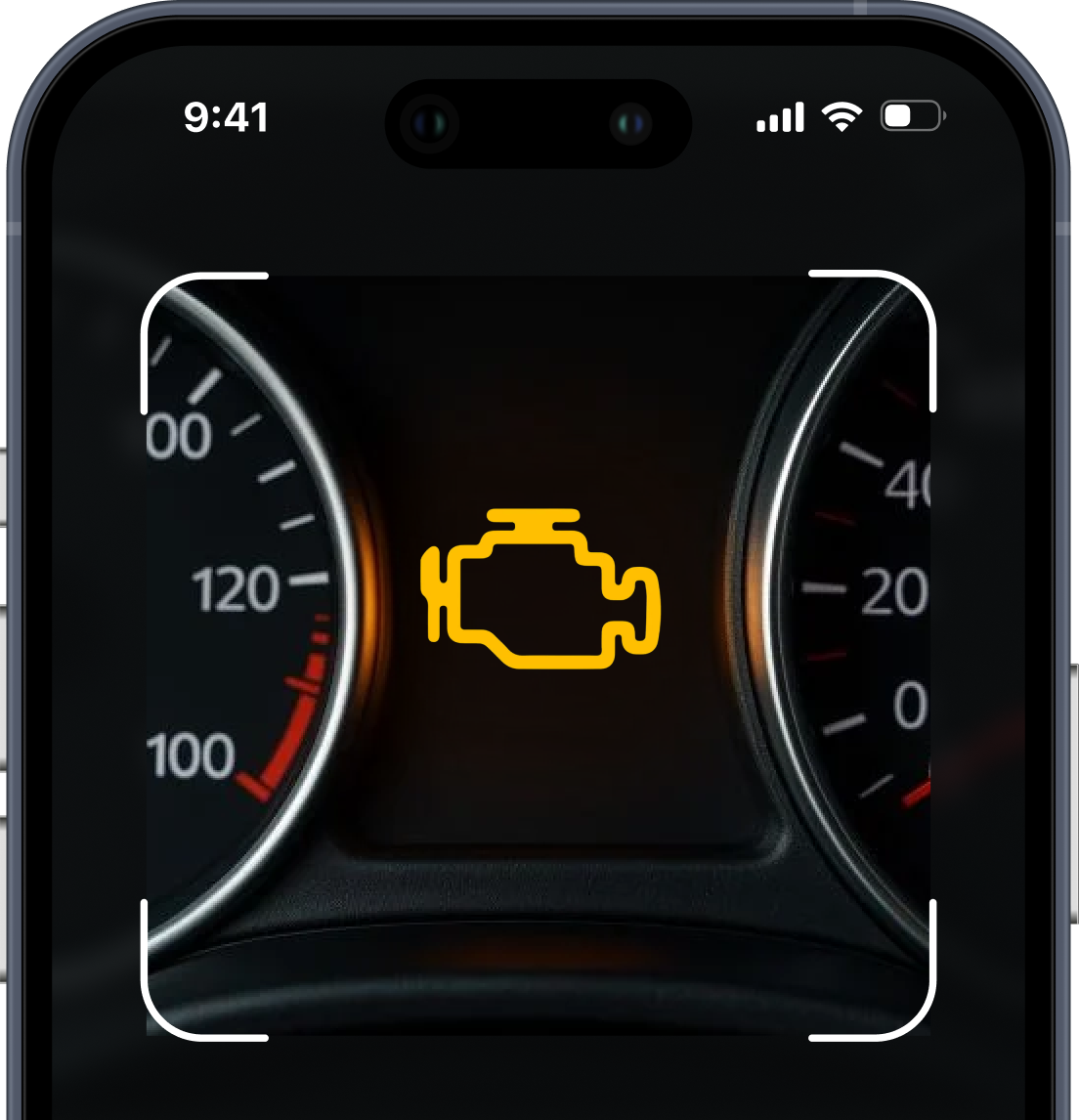
The Engine Management Light means your vehicle's engine control system has detected a fault affecting engine performance, emissions, or fuel efficiency. The problem can range from a minor sensor issue to a more serious engine malfunction.
No OBD scanner required.
Immediate Answer
What Does the Engine Management Light Mean?
The Engine Management Light, also known as the Malfunction Indicator Lamp (MIL), is triggered when the Engine Control Unit (ECU) detects a fault outside normal operating limits.
The warning may be caused by problems with the fuel system, ignition system, emissions equipment, intake sensors, or engine electronics. In many cases, the vehicle will continue to drive normally, although you may notice reduced power, rough idling, poor fuel economy, or hesitation during acceleration.
A solid light usually indicates a non-critical fault, while a flashing Engine Management Light often signals an engine misfire that can quickly damage the catalytic converter.
The exact cause can only be identified by reading the stored diagnostic trouble codes (DTCs).
Is It Safe to Drive?
Can You Drive With the Engine Management Light On?
- Usually yes—but only if the light is solid and the vehicle is driving normally.
- If the light is solid and there are no noticeable performance issues, you can usually continue driving carefully and schedule diagnostics soon.
- If you experience rough running, reduced power, poor acceleration, or unusual engine noises, have the vehicle inspected as soon as possible.
- If the light is flashing, stop driving immediately. A flashing Engine Management Light usually indicates a severe engine misfire that can rapidly damage the catalytic converter.
Common Causes
Most Common Causes of the Engine Management Light
| Cause | Severity |
|---|---|
| Faulty oxygen (O2) sensor | Medium |
| Loose or faulty fuel cap | Low |
| Engine misfire (spark plugs or ignition coils) | High |
| Mass Air Flow (MAF) sensor fault | Medium |
| Catalytic converter problem | High |
| Fuel or emissions system malfunction | Medium–High |
*The exact cause depends on your vehicle, stored diagnostic trouble codes, and the symptoms you're experiencing.
How CarFix Helps
Find Out Why Your Engine Management Light Is On
The Engine Management Light can be triggered by hundreds of different faults. CarFix helps narrow down the most likely cause and explains what the warning means for your specific vehicle.
- Scan your dashboard warning in seconds
- Get an AI explanation tailored to your vehicle
- Learn the most likely engine or emissions faults
- Understand whether it's safe to continue driving
- Receive personalized recommendations for your next steps
F.A.Q.
Frequently Asked Questions
Is the Engine Management Light the same as the Check Engine Light?
In most vehicles, yes. The terms "Engine Management Light" and "Check Engine Light" are often used interchangeably to describe the Malfunction Indicator Lamp (MIL).
Can I drive with the Engine Management Light on?
If the light is solid and the vehicle is running normally, you can usually drive for a short period. If the light is flashing or the engine runs poorly, stop driving and have the vehicle inspected immediately.
What causes the Engine Management Light to come on?
Common causes include faulty sensors, ignition system problems, fuel system faults, emissions issues, engine misfires, or catalytic converter problems.
Will the Engine Management Light turn off by itself?
Sometimes. If the fault is temporary, the light may switch off after several successful drive cycles. However, persistent faults require diagnosis and repair.
Can CarFix help diagnose an Engine Management Light?
Yes. Scan your dashboard warning with CarFix to receive an easy-to-understand explanation, likely causes, severity assessment, and personalized recommendations based on your specific vehicle.
Download CarFix
Scan any dashboard warning and get a clear AI diagnosis — right from your iPhone.
Available on the App Store.